

Masonry & Steps · Ottawa
Masonry, steps and landings in Ottawa
Front steps, back steps and landings in block and stone, rebuilt on a new compacted base so they stop rocking and tipping toward the door. Stucco refreshes and small masonry repairs too.
- Segmental wall block
- Stone
- Compacted base
- Filter fabric
- Stucco
What goes wrong
Why steps sink and landings crack
Steps sink because the ground under them is the weakest on the lot: soil backfilled against the foundation, right where roof water lands. That ground keeps settling. Water gets into the joints, freezes, and pushes blocks and stones out of line, until treads rock and tip toward the door.
Loose pieces reset on the same soft ground tend to move again the next winter. So we take the steps or the landing apart, dig out what has settled and build a compacted base first. Then the block or stone goes back one course at a time, each checked with a level.
You get steps that feel solid underfoot, treads that shed water away from the door, and a base made for Ottawa winters.
How we build it
What keeps a set of steps level
Steps stay level when the base under the first course is dug out, rebuilt and compacted.
- Take it apart
Old steps come apart piece by piece. Sound block is kept to go back in.
- Base first
Settled ground under the steps is dug out and replaced with a compacted base.
- Course by course
The first course sets the line above it, so it gets the most time with a level.
- Shed the water
Treads fall slightly away from the door, so rain and meltwater run off.
- Block or stone treadsEach course checked for level and line before the next goes on.Set course by course
- Levelled beddingA thin, flat bed so every block sits evenly with no rocking.Screeded flat
- Compacted baseBuilt up and compacted where the old, settled ground was dug out.Placed in lifts
- Filter fabricKeeps the base from mixing into the soil underneath.Laid over the soil
- Native soilSoft and backfilled ground next to the house is dug out first.To firm ground
What we build
Masonry and steps: the work we take on
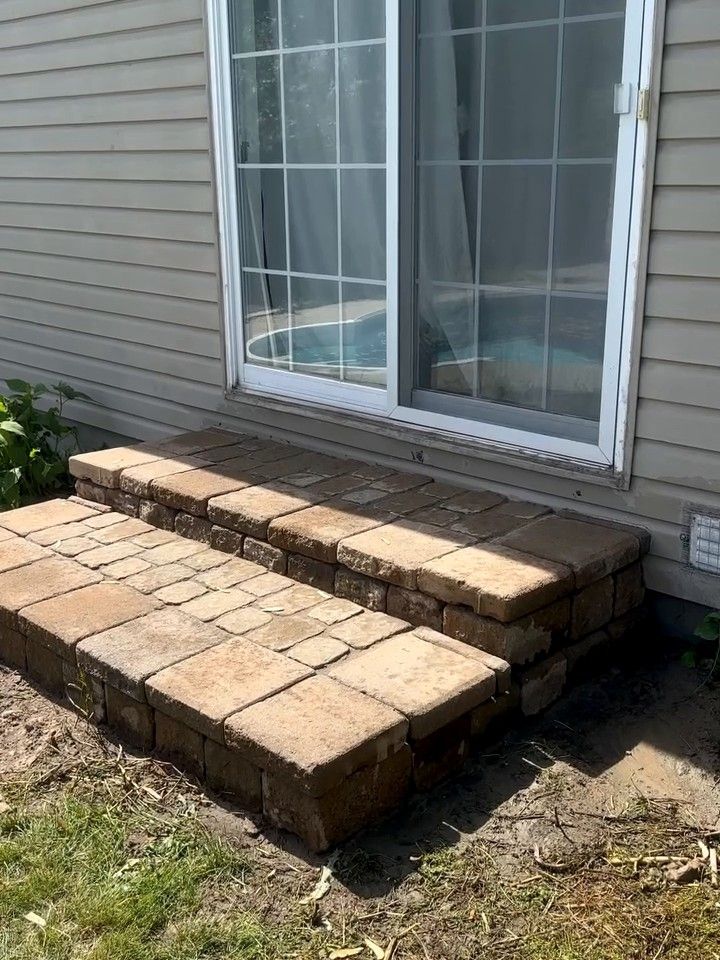
Block steps
Segmental block steps at patio doors and back entrances, rebuilt from the base up.
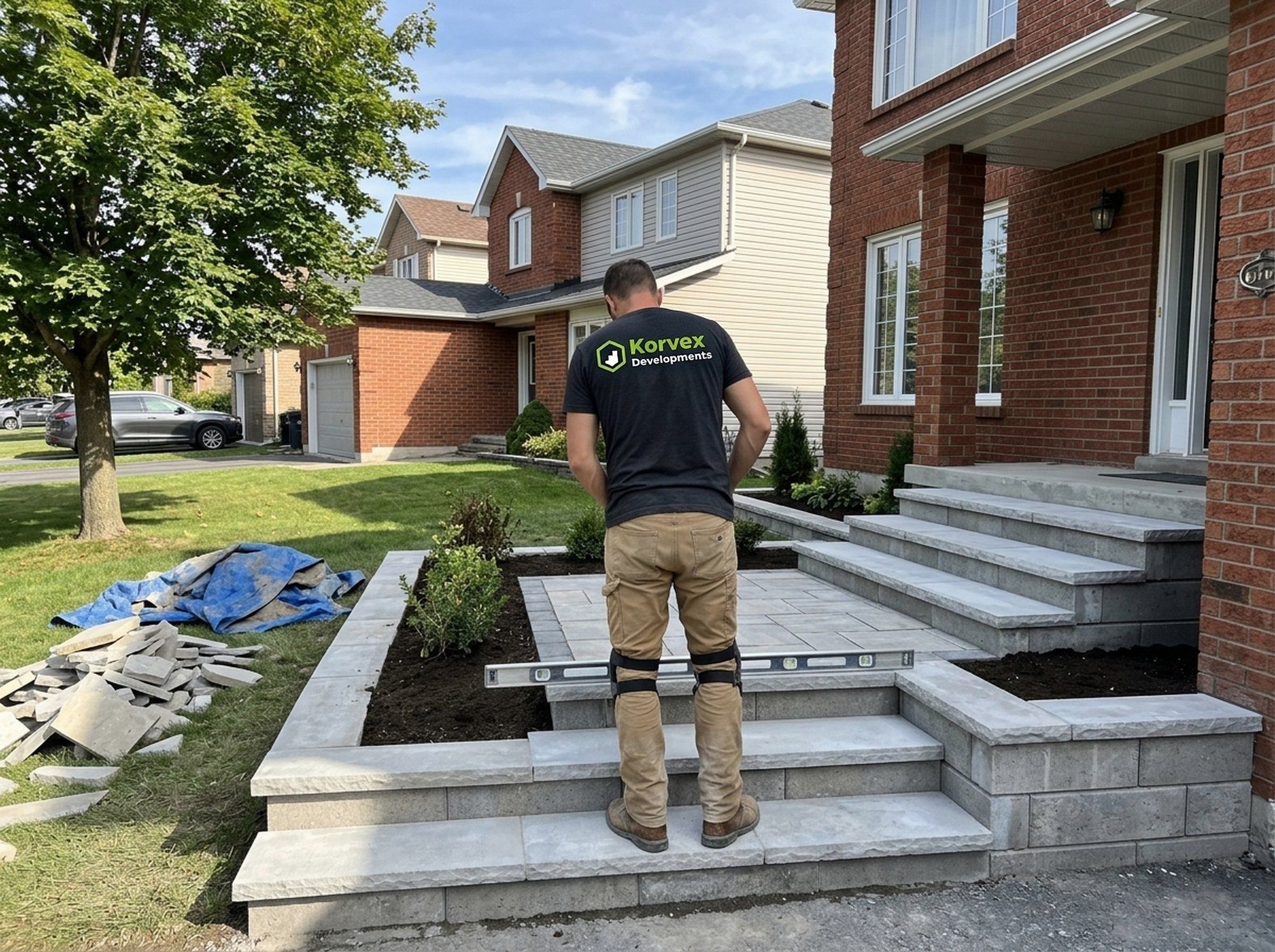
Front landings
Porch landings and entrance steps between stone or block walls, rebuilt in layers: soil dug out, fabric laid, then a levelled stone base.
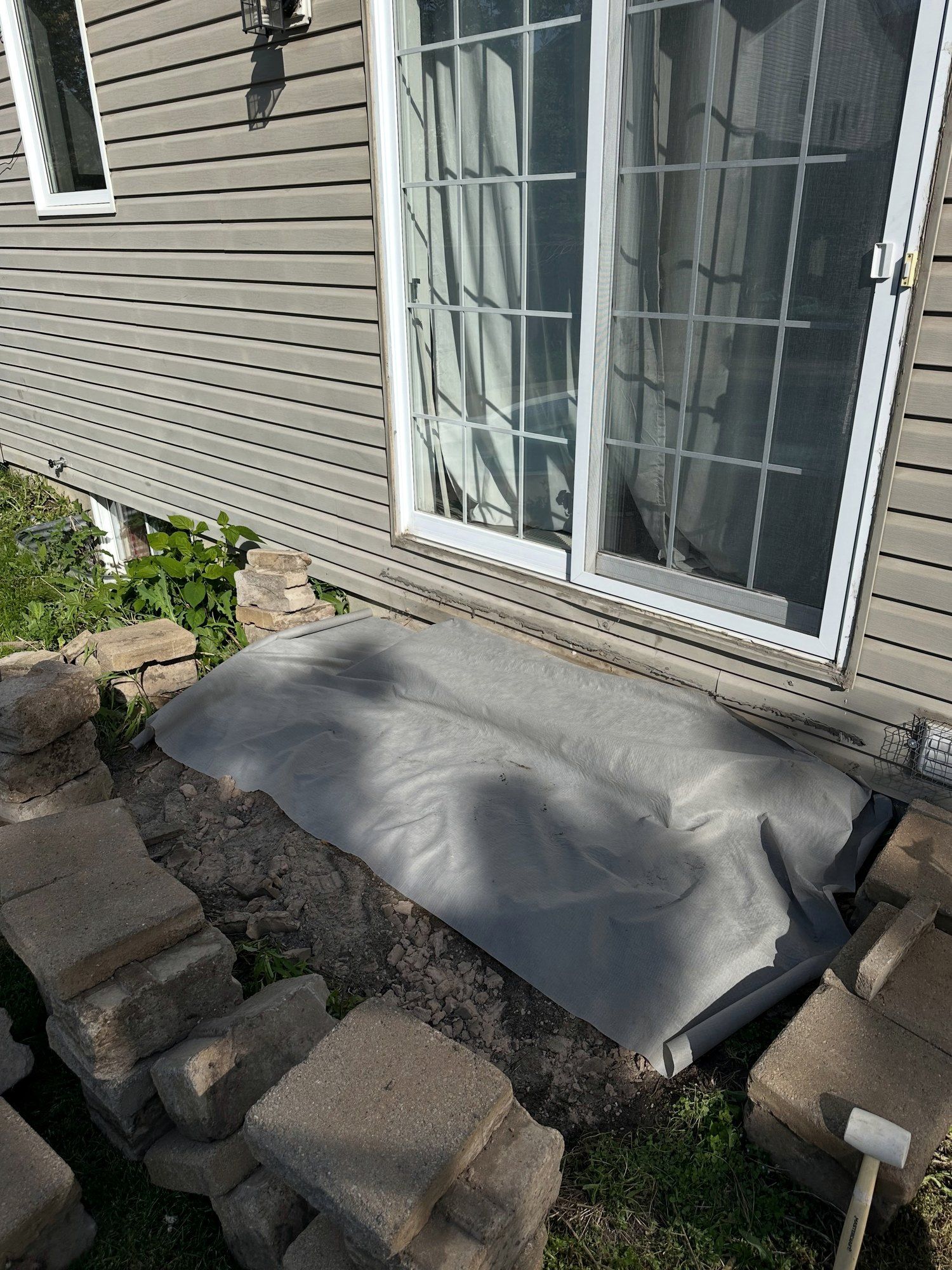
Small masonry repairs
Loose blocks, rocking treads and short sections of stone taken up and reset on a sound base.
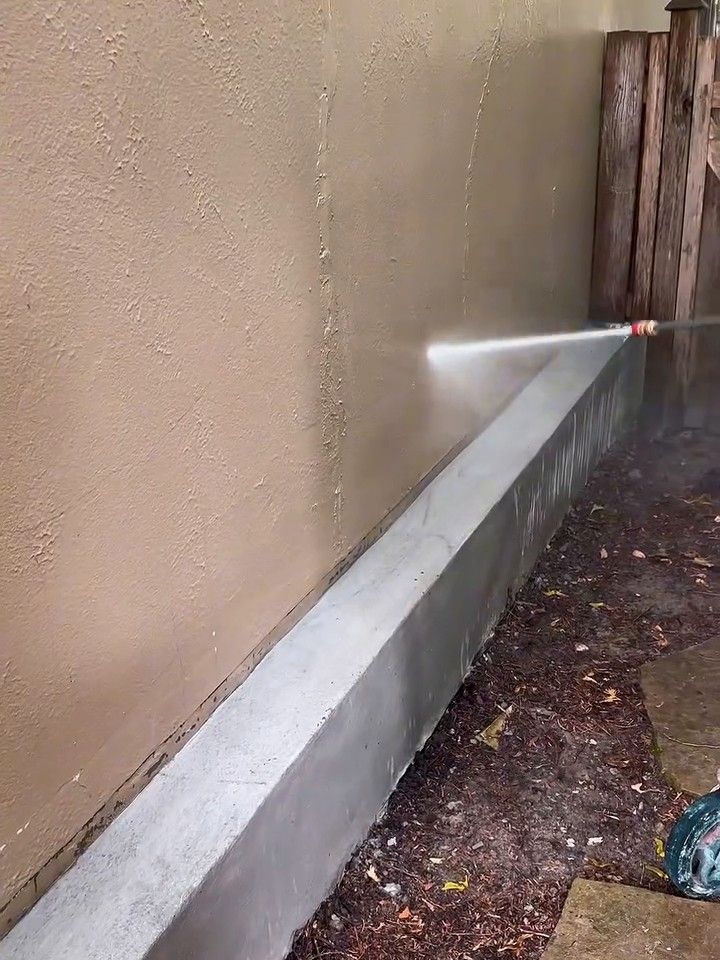
Stucco and wall refresh
Stucco walls washed and refinished, so a stone-and-stucco exterior looks clean again.
Reusing your block
Sound block from the old steps is sorted and set back where it fits the new build.
Parging
Ask about parging repairs on the exposed part of a foundation wall.
Real projects
Masonry and steps we have built
Our own jobs, photographed on site by the Korvex crew.
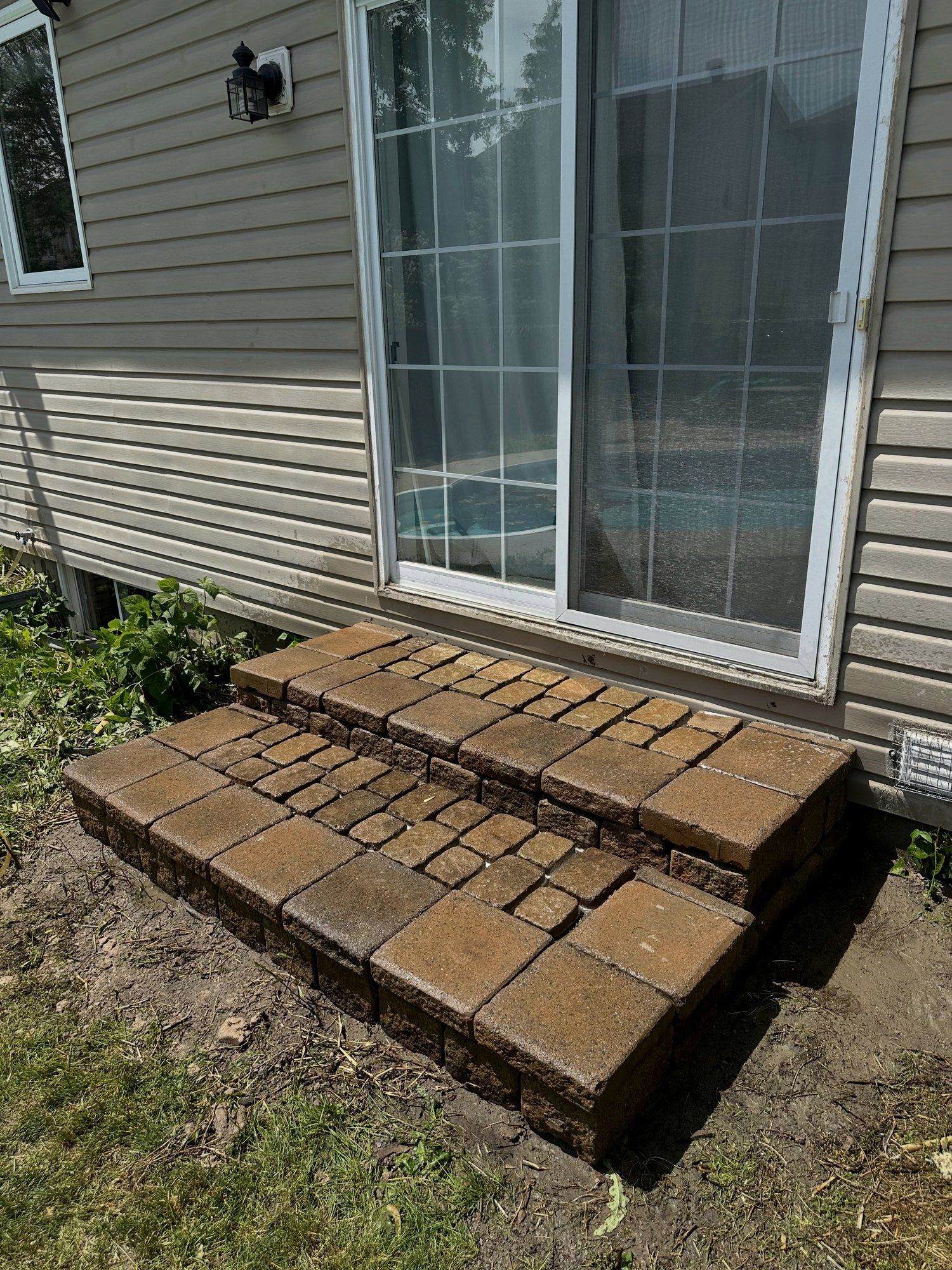
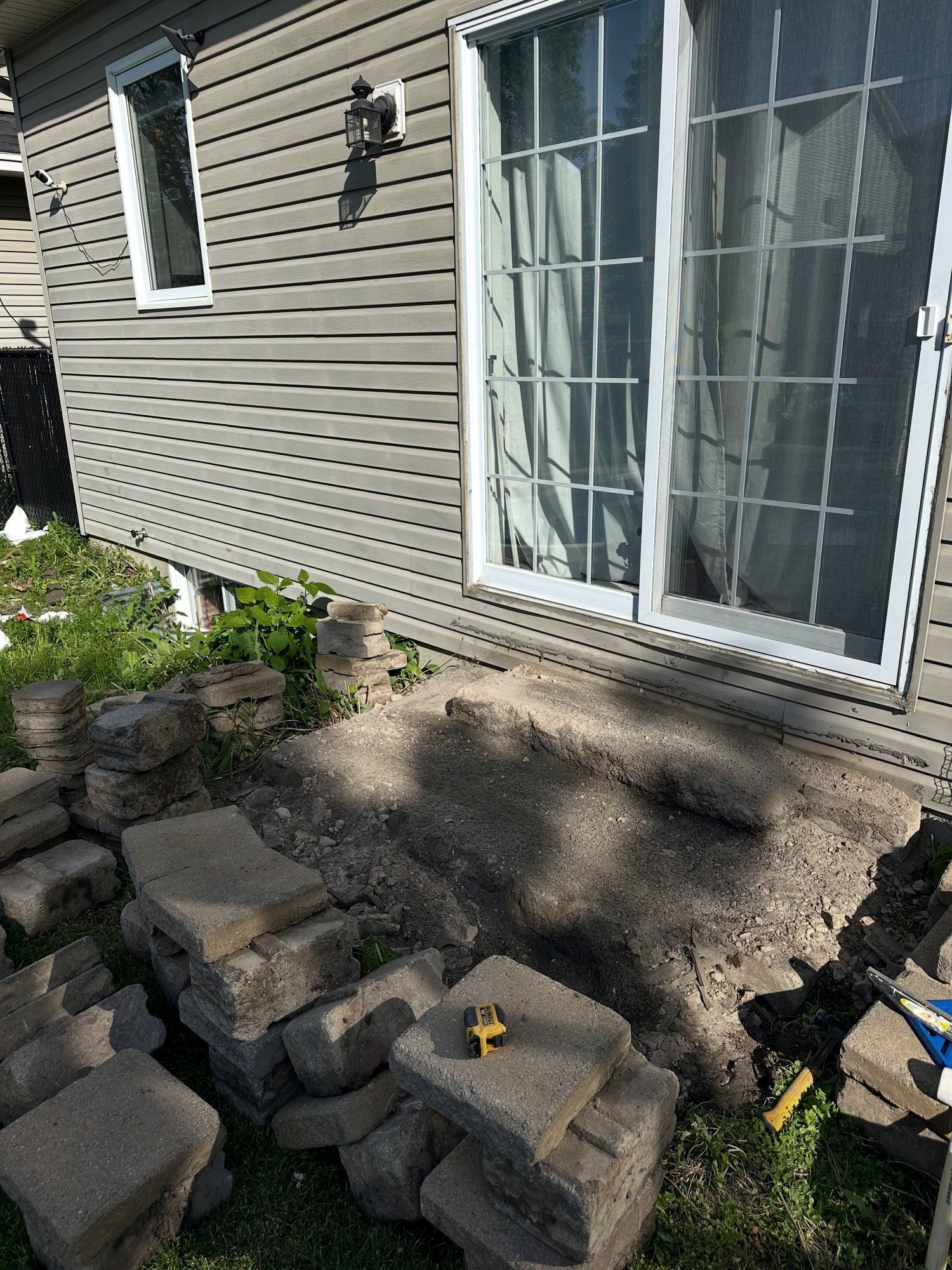
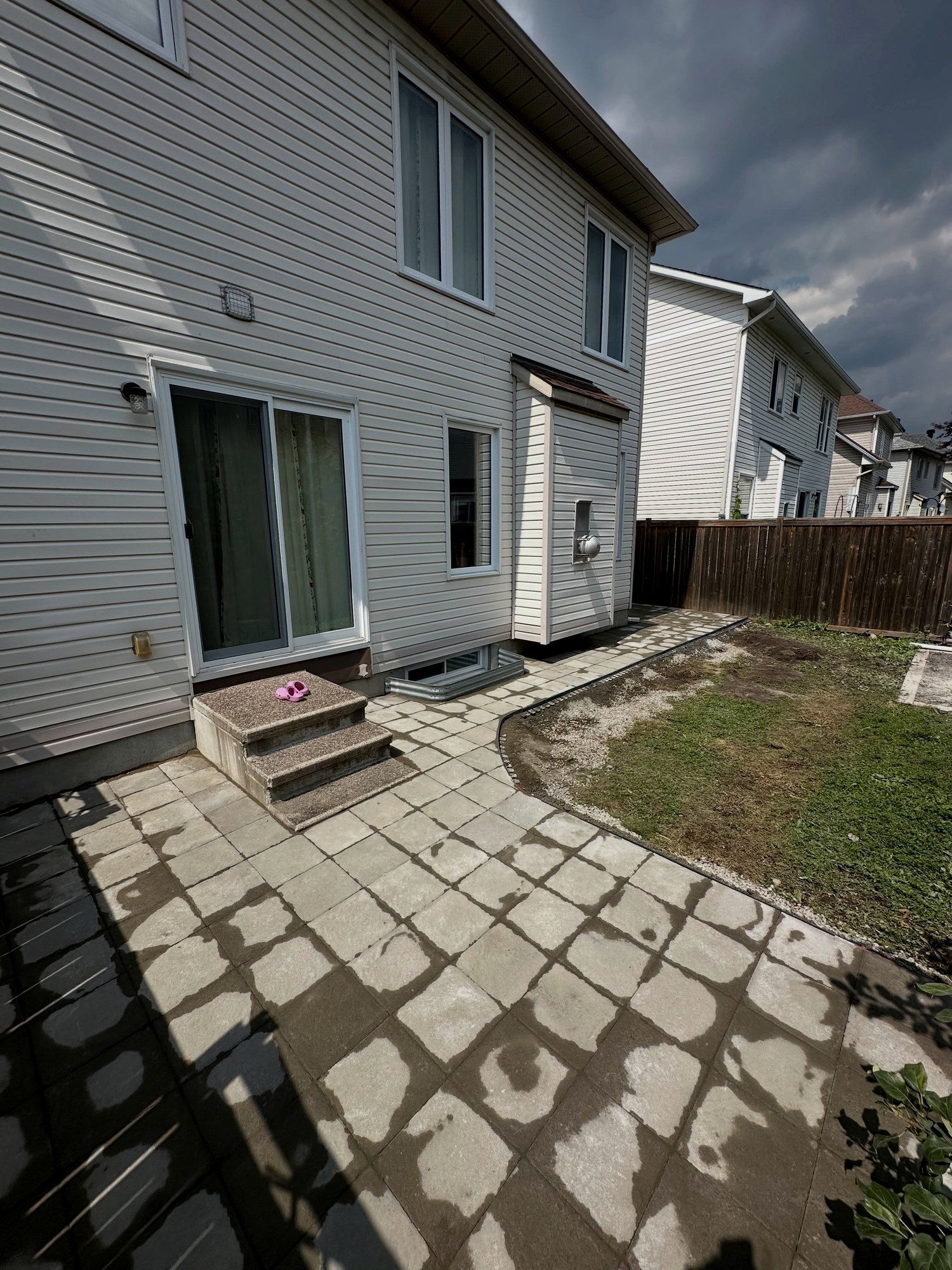
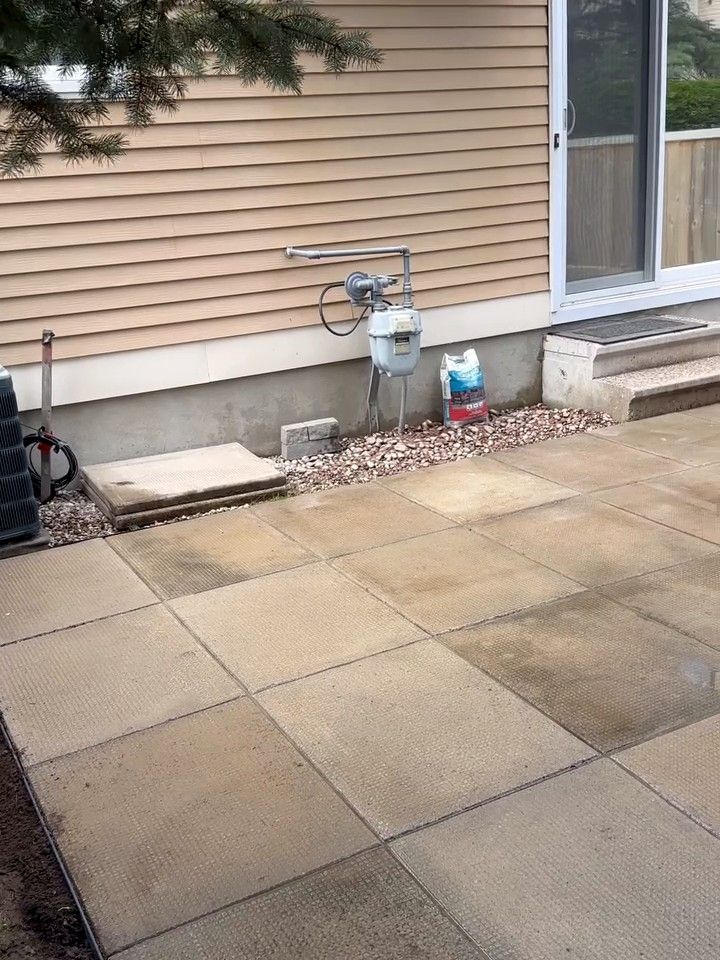
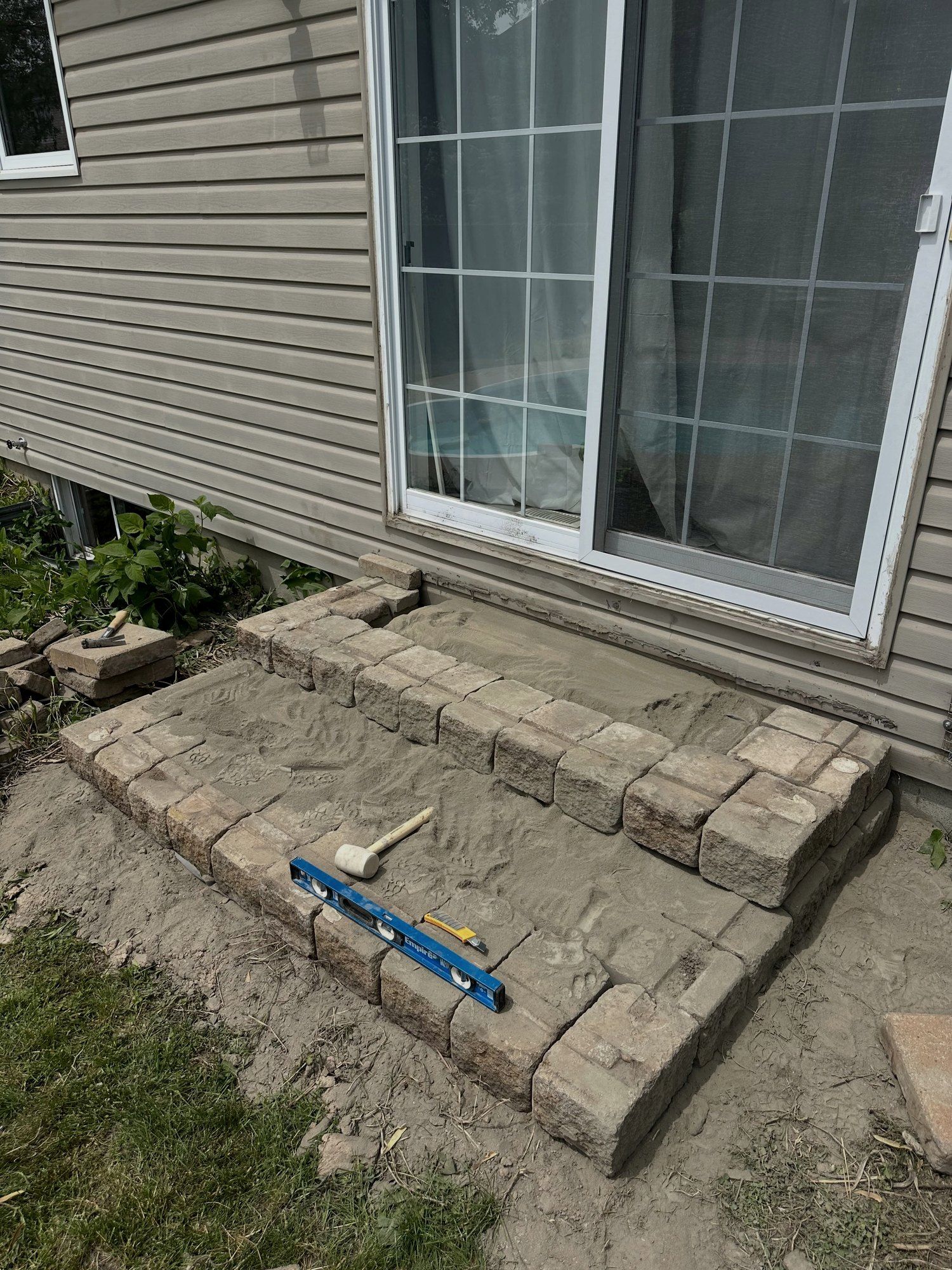
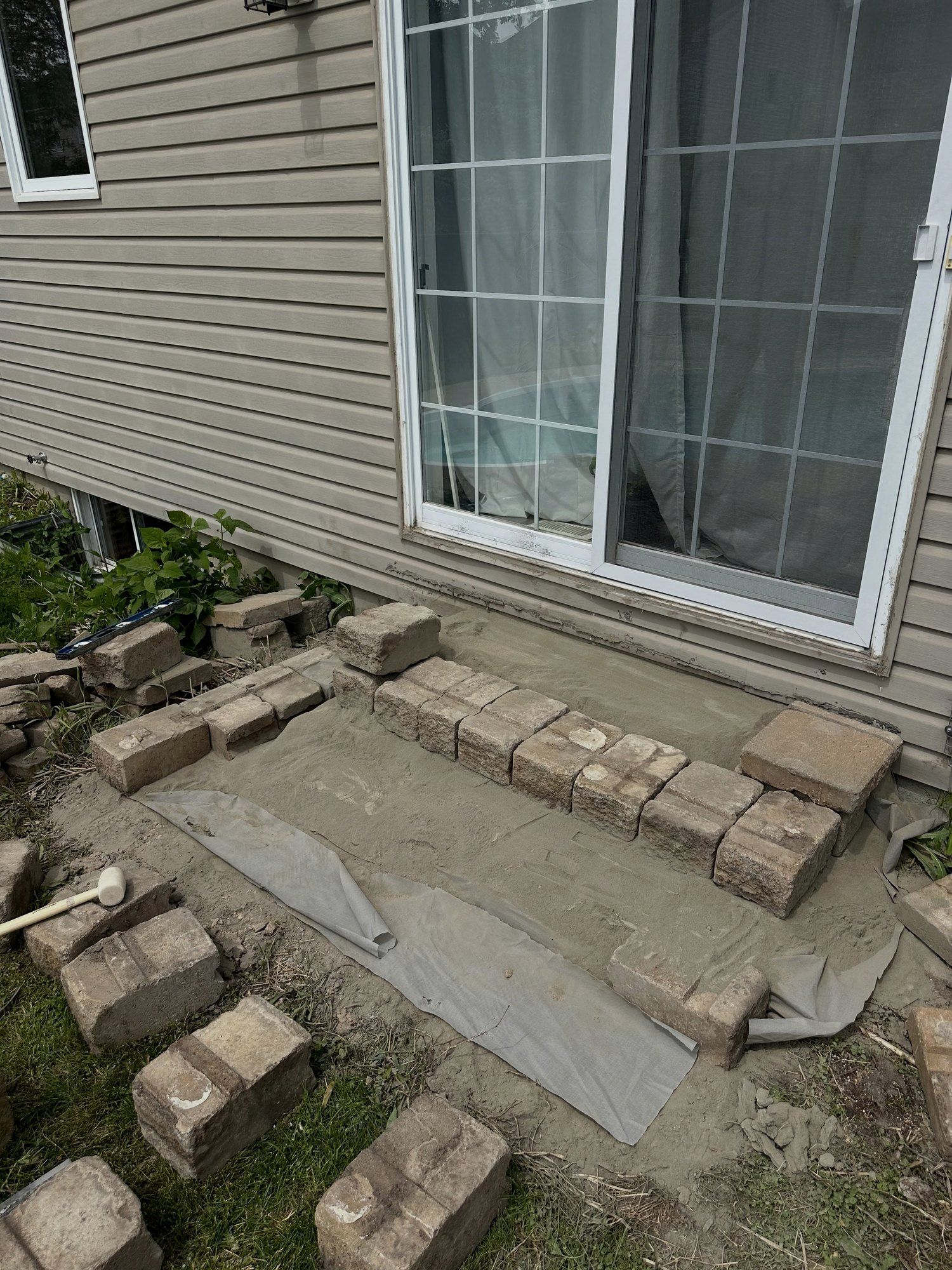
Rear patio-door steps rebuilt
Loose block steps under a patio door taken apart and rebuilt course by course on a new base.
View project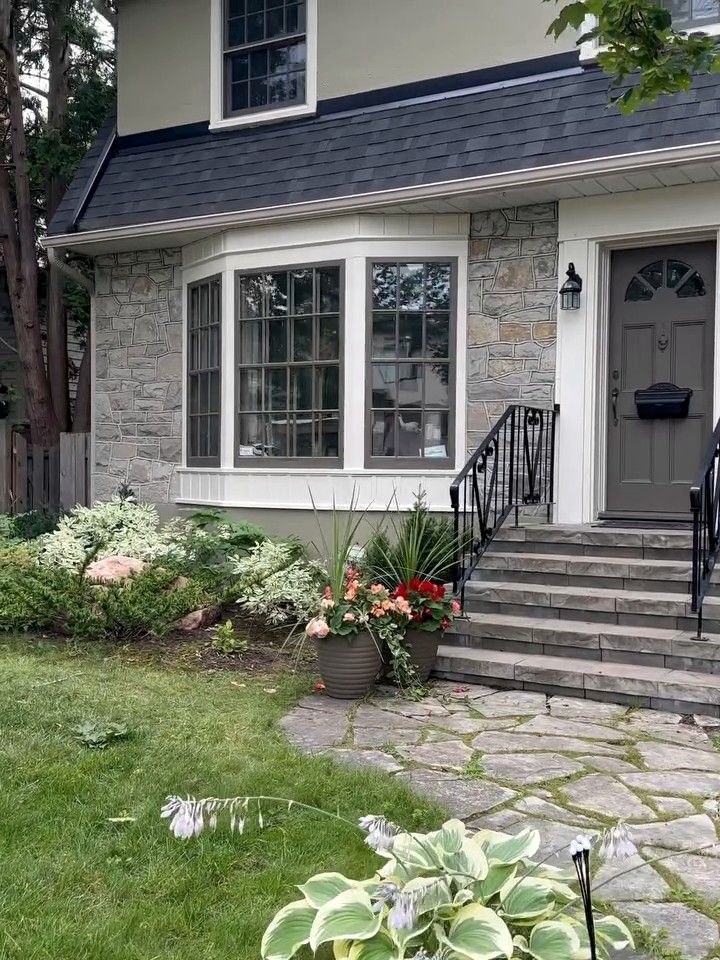
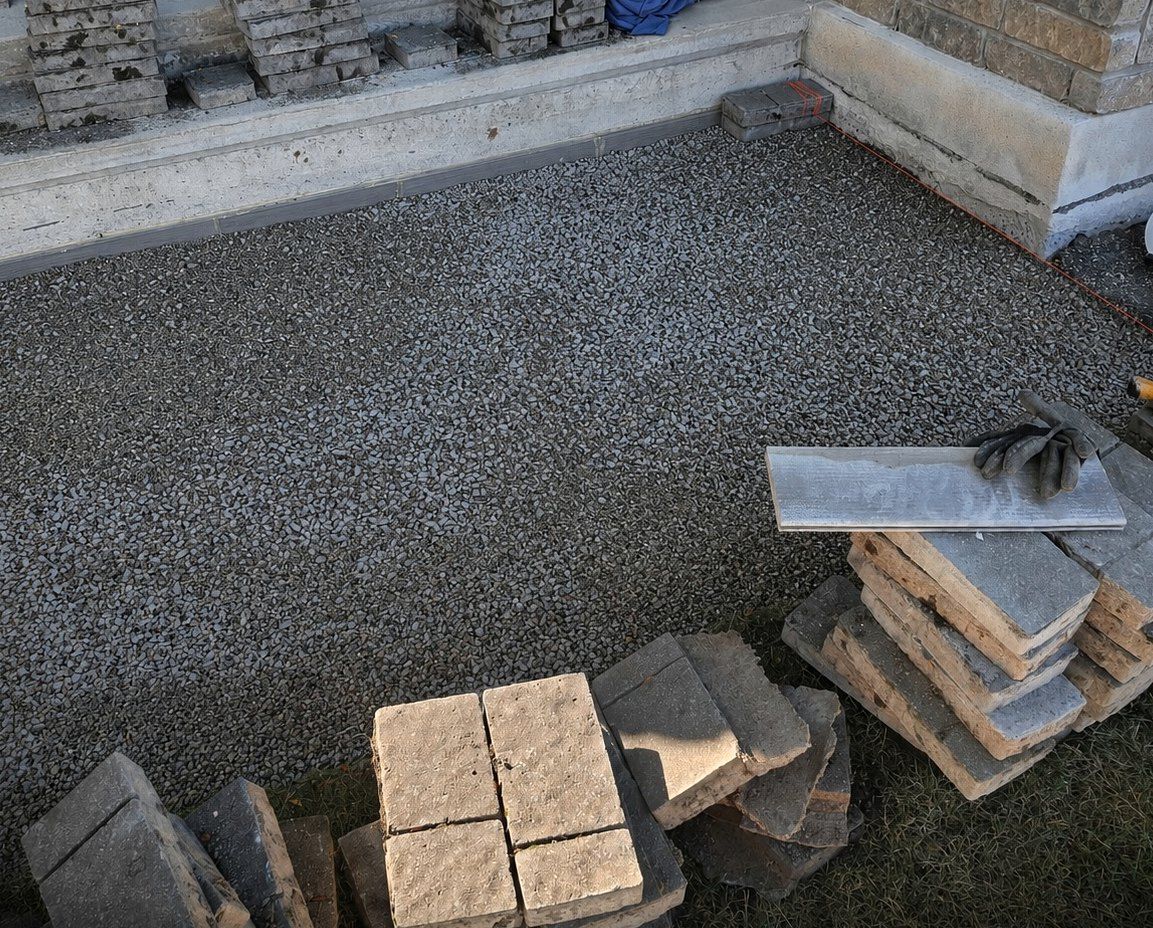
“They did a great job. They arrived as expected and completed the job in a timely manner. The stairs look great and I would recommend them to anyone”
Henry · Masonry steps · Ottawa
Related services
Often built together
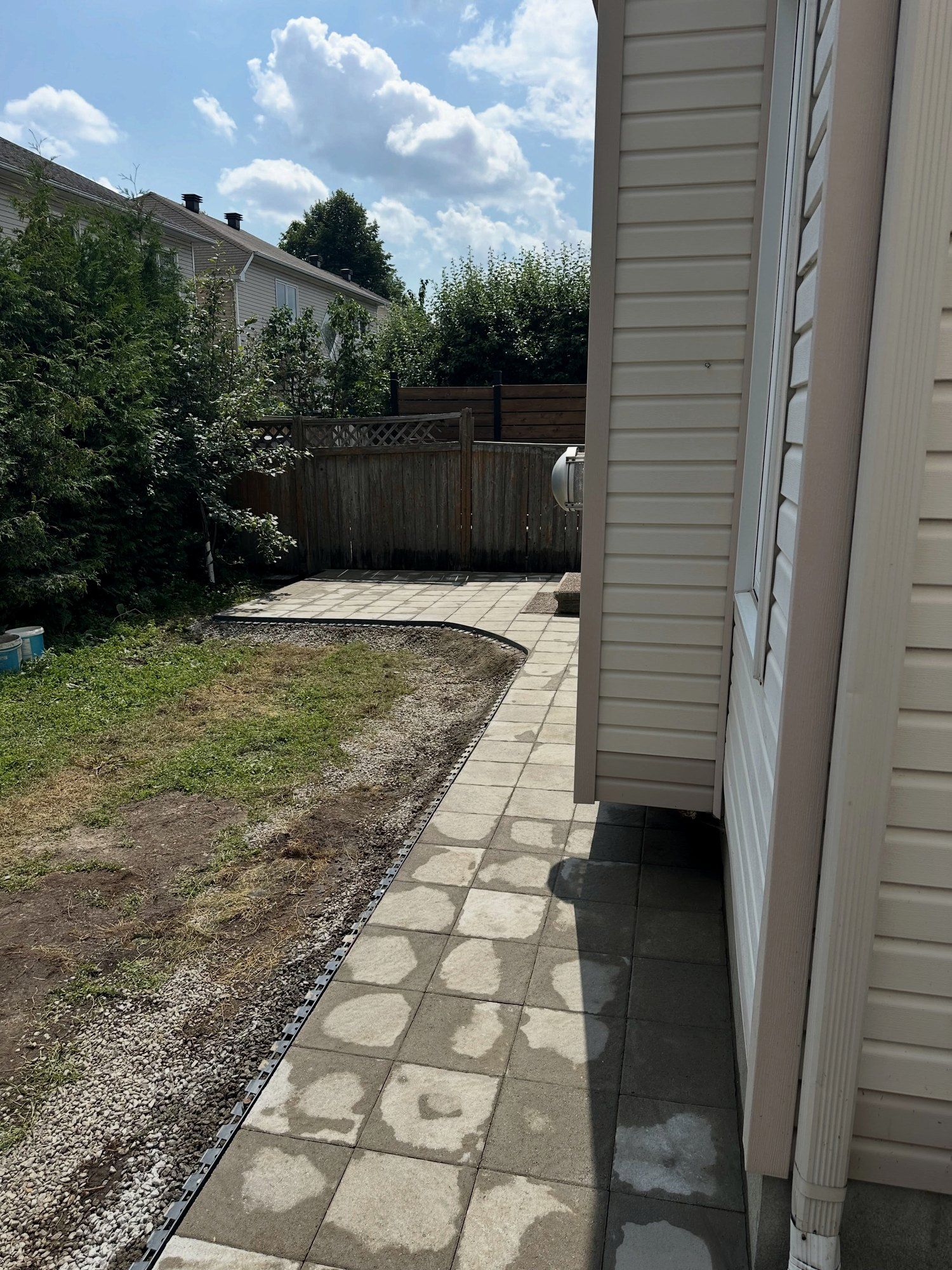
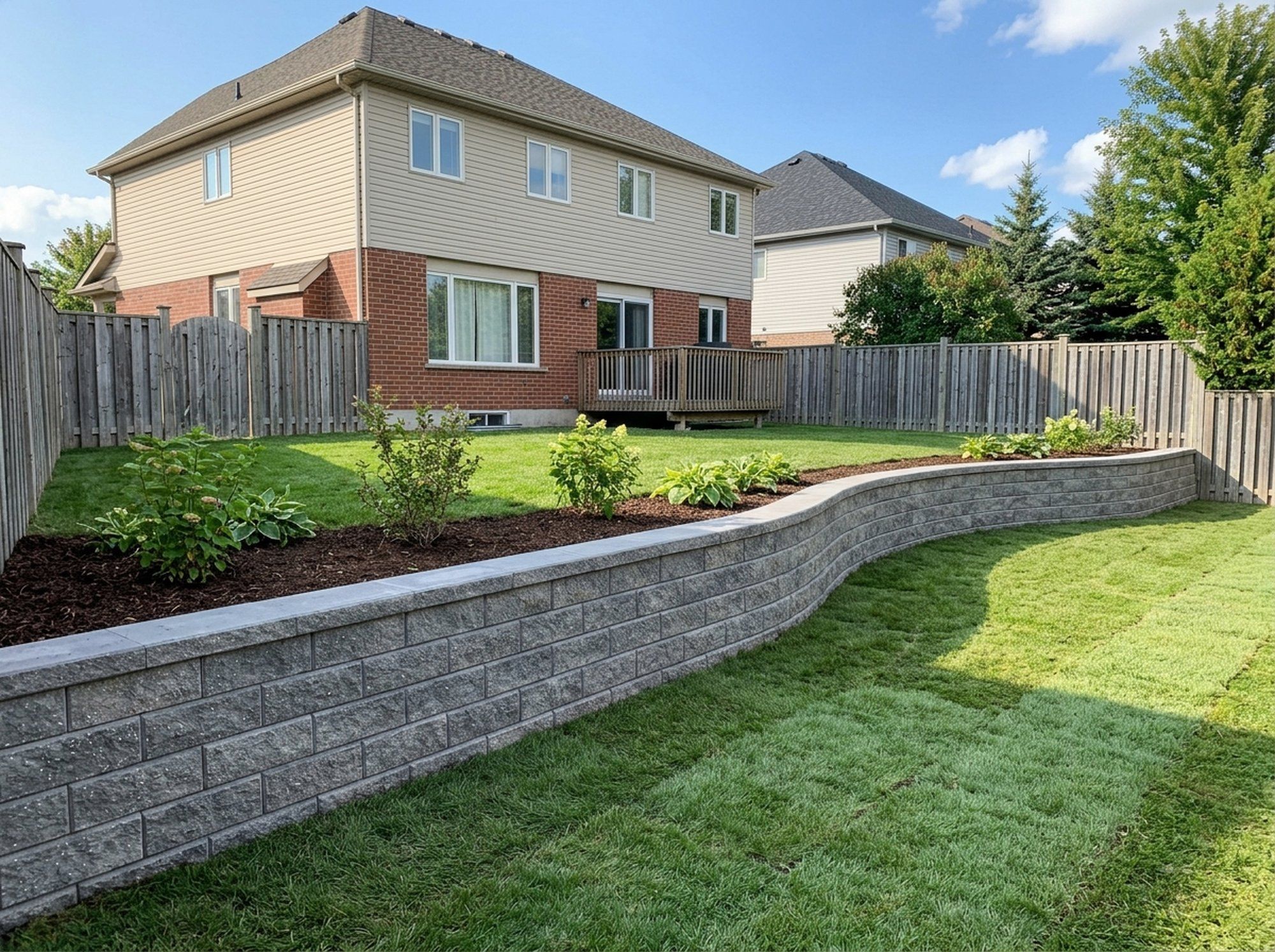
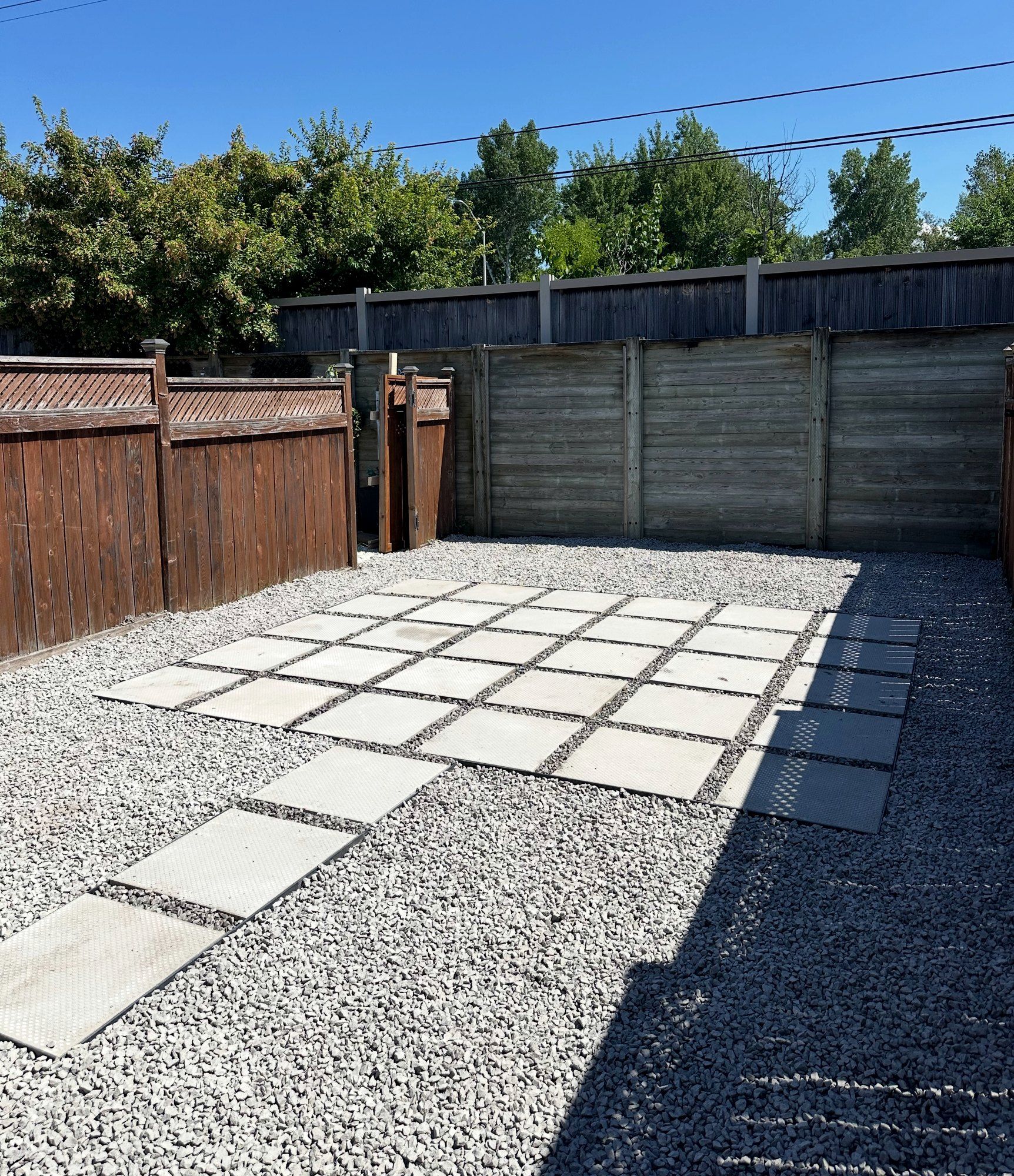
FAQ
What homeowners ask about masonry and steps
Why are my front steps sinking?
The ground next to a house is usually backfill placed after the foundation went in, and it keeps settling for years. Roof water soaks into that soil, freezes, lifts the steps and drops them unevenly in spring. Korvex rebuilds sinking steps on a dug-out, compacted base, so the new treads sit on firm, compacted ground.
Can you fix a few loose blocks instead of rebuilding the steps?
Sometimes. If the base is sound and only a few pieces have moved, Korvex lifts them, levels the bedding and sets them back as a small repair. If the whole set rocks or tips toward the door, the base itself has settled, and rebuilding the steps from a new compacted base is the fix that lasts.
Can my old blocks be reused?
Often, yes. Blocks without cracks or broken faces are sorted out when the steps come apart and set back into the new build, which keeps the look of your entrance and saves on material. Korvex tells you at the estimate roughly how much new block you will need to finish the job.
Can old stucco be refreshed instead of replaced?
If it is still bonded to the wall, stucco can usually be washed and refinished, which usually costs less than a full replacement. Cracked or loose sections are repaired first. Korvex looks at the wall, taps for hollow spots and checks the cracks before recommending a refresh or a repair.
Do I need a permit to rebuild front steps?
Steps and landings that lead to the house need a building permit in Ottawa where the surfaces differ by more than 600 mm (2 ft.). Rise and run, guards and handrails have to meet the Building Code either way. Korvex checks what applies to your steps at the estimate.
When can steps be rebuilt, and how long does it take?
Frozen ground cannot be compacted properly, and mortar, stucco and sealers need temperatures above freezing to set, so on most Ottawa sites masonry runs from spring to fall. Most Korvex jobs take one to two weeks on site; the number of steps, the material and how much ground has to come out set yours. The schedule comes with the written quote.
How much does it cost to rebuild steps?
A step rebuild is priced on the number of steps, the block or stone, how much settled ground has to come out and how much old block can be reused. Korvex Developments gives you a written price after seeing your steps in Ottawa, Kanata, Orleans or Barrhaven, with the new base included.

Book a free masonry estimate
Tell us what you want built and send a few photos. We come out, look at what sits under the job, and give you the scope and the price in writing.