

Drainage & Grading · Ottawa, ON
French drains and yard drainage in central Ottawa
French drains, clear-stone strips and regrading for central Ottawa yards that hold water, from the Glebe and Sandy Hill to Alta Vista. We trace where the water comes from, choose where it can leave, and build the path between.
- Clear stone
- Filter fabric
- Perforated pipe
- Dimpled membrane
The local picture
Drainage & Grading in central Ottawa

The City expects owners to keep the lot grades set by the original grading plan, and swales cannot be filled, piped or blocked by sheds, gardens or other landscaping. On an older central lot, decades of patios and gardens can change how the yard drains, so we read the slope as it is today and restore a fall away from the house.
Downspouts should discharge onto grass at least four feet from the foundation, and never onto a neighbour’s yard or the sidewalk. A narrow lot leaves little room for that, so a shallow French drain, a clear-stone strip along the wall or a planned downspout outlet carries the water to a place that works for your lot.
Wet yards on older central streets
The Glebe, Sandy Hill, Old Ottawa South, Alta Vista
Korvex Construction installs shallow French drains, regrades side and rear yards and lays clear-stone strips for homeowners in central Ottawa, from the Glebe and Sandy Hill to Old Ottawa South and Alta Vista. It starts with a free on-site estimate: we walk the lot with you, find where the water comes from and where it can leave, and the written quote follows the visit.
The Glebe, Sandy Hill and Old Ottawa South were mostly built up in the late 1800s and early 1900s. The City says many of Ottawa’s older urban areas were developed without thinking about managing rainwater, and that roofs, streets and driveways send rain off quickly instead of absorbing it. On a narrow lot, that runoff has two short routes: toward your own wall or toward the house next door.
Downspouts that disappear into the ground
What changes when roof water comes back to the surface
On some older houses the downspout ends in a pipe in the ground. The City’s basement flooding guidance advises disconnecting downspouts from the sewer system or foundation drains and capping the end that comes out of the ground. The same page asks for roof water to go to permeable areas 3 metres from the foundation.
Three metres of open lawn is rare between a central house and its neighbour. The City’s lot grading FAQ adds that water must never be directed onto a neighbour’s property, a sidewalk, a right of way or an easement, and that where space is limited it goes to the lot’s intended drainage point. That is the part we plan: a regraded strip, a shallow French drain to a lower part of the yard, or clear stone that lets water drop off the surface fast.
Rain Ready Ottawa on older streets
The City’s Rain Ready Ottawa program offers rebates for projects such as downspout redirection, rain gardens and soakaway pits in priority stormwater retrofit areas, the parts of the city built before adequate stormwater management measures were common. Eligibility goes by street address, through a lookup on the City’s site, and the program sets its own conditions, such as a home assessment or its online courses.
If your address qualifies, mention it at the site visit. The drainage plan for the yard comes from the same walk-through either way, and you can check the program’s conditions against it before the work starts.
At the site visit
What we check on a lot in central Ottawa
- 01
Where each downspout ends: on the lawn, on a walkway, or in a pipe in the ground.
- 02
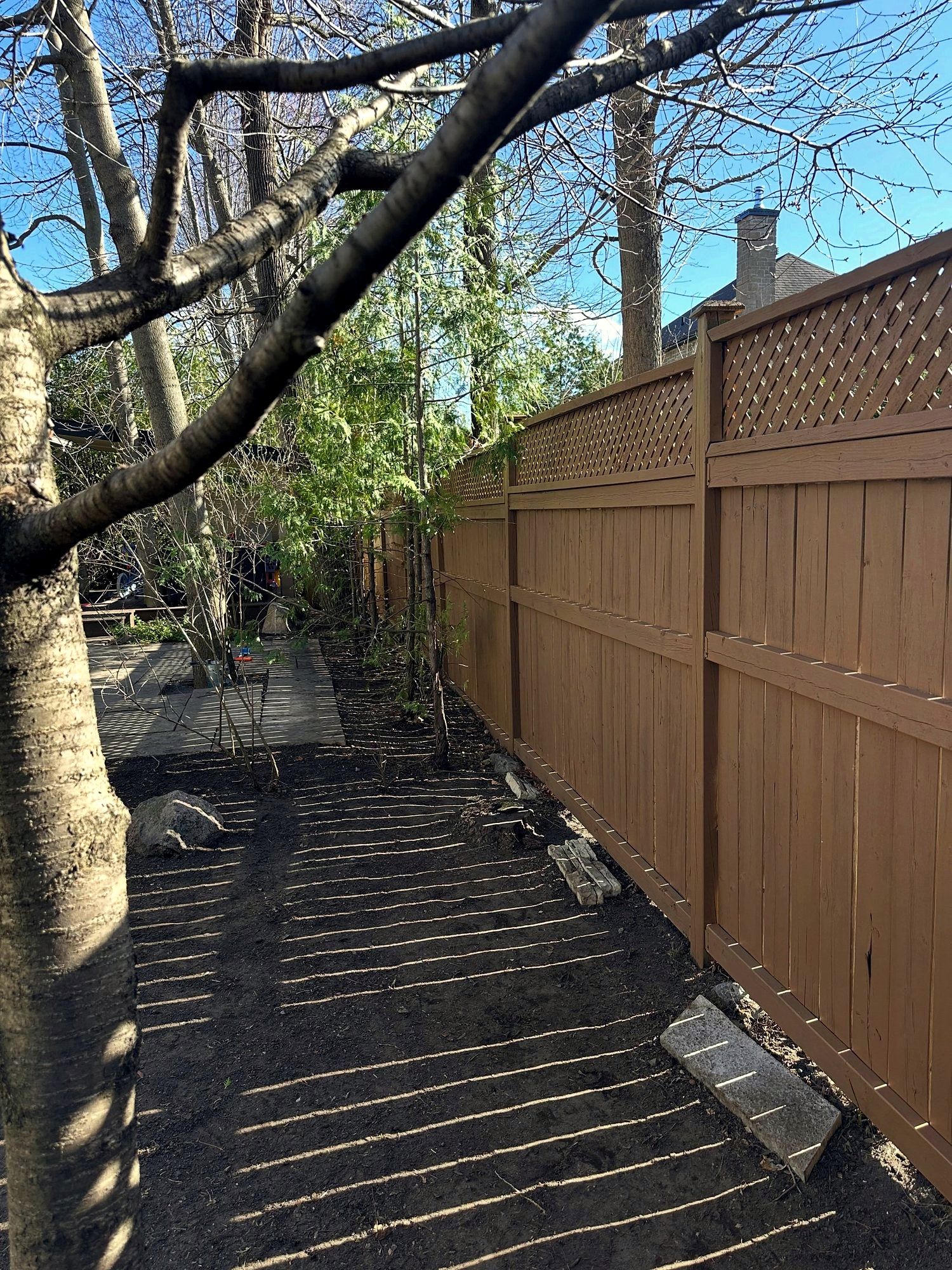
How the side yard falls between your wall and the neighbour’s, and whether old slabs tip toward the house.
- 03
Where snow is piled in winter, since the City advises clearing it away from the foundation.
- 04
How materials and digging reach the back: gate width, a shared walkway, or only through the front.
- 05
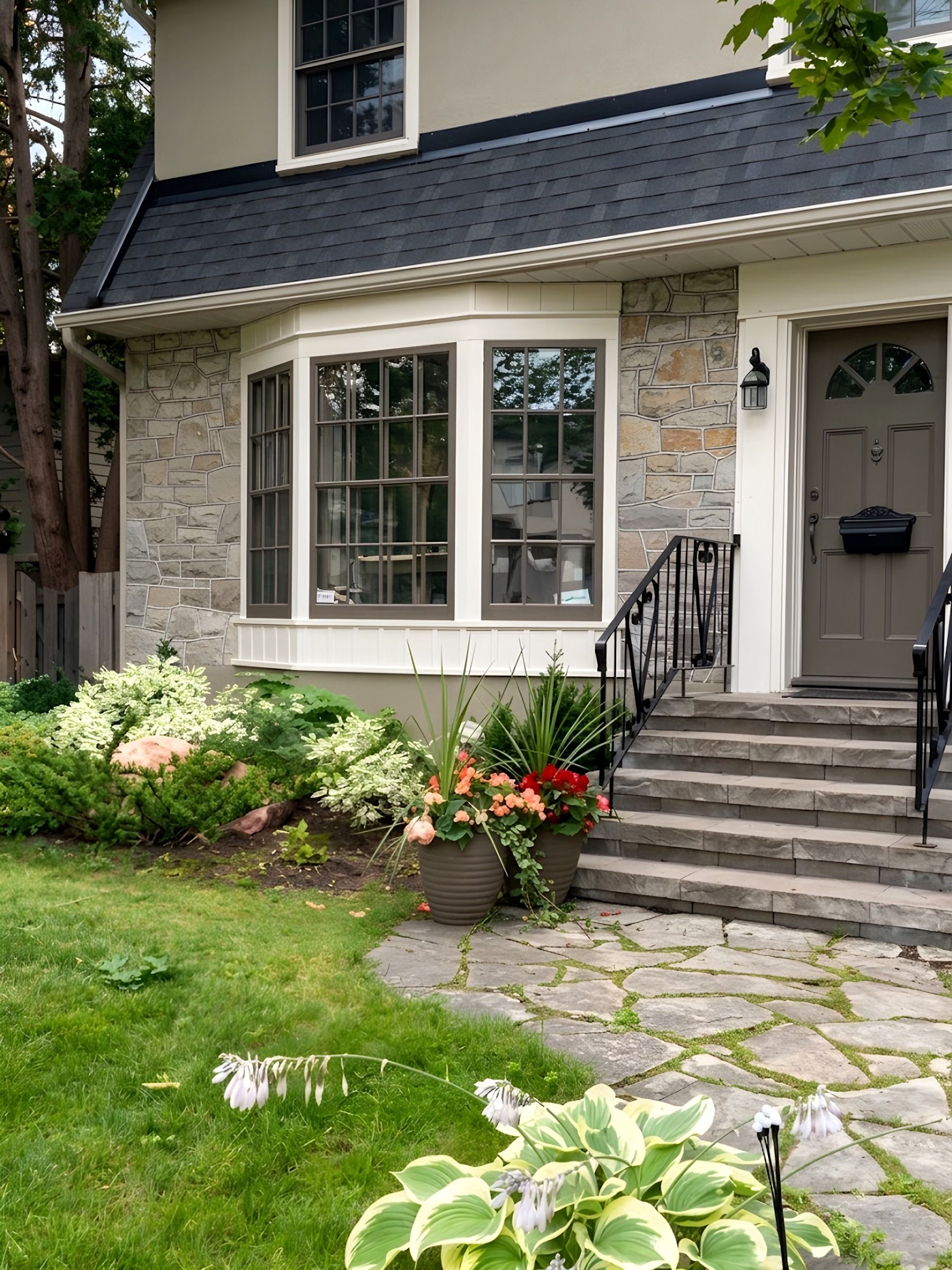
Which way the front yard falls toward the sidewalk and the street catch basin.
- 06
Marks that show where water sits: a stained foundation, moss, soft lawn or a worn gully.
What we plan around
Local conditions in central Ottawa
Each point links to the public source it was checked against. At the site visit we check how it applies to your lot.
- Original lot grading
The City expects owners to keep the lot grades set by the original grading plan. Swales cannot be filled, piped or blocked by sheds, gardens or other landscaping.
- Downspouts on tight lots
Downspouts should discharge onto grass at least four feet from the foundation, and never onto a neighbour's yard or the sidewalk. On a narrow lot that leaves little room, so the downspout is planned together with the patio or deck.
How we build it
How a drainage fix is built
Every lot drains differently. The drawing shows the parts most of our drainage jobs use.
- Find the source
Roof water, runoff, a neighbour’s slope or a high water table: each needs its own fix.
- Outlet first
Chosen before digging. A drain with nowhere to discharge only moves the puddle.
- Protect the foundation
A dimpled membrane under the stone can steer water away from the wall.
- Grade the surface
Finished ground slopes away from the house, toward the drain.
- Clear-stone surfaceOpen stone over the membrane, so water gets off the surface fast and is carried away from the wall.Open and free-draining
- Filter fabricKeeps soil from washing into the stone and clogging it over time.Laid over the soil
- Perforated pipe, where neededCollects water in the trench and carries it to the planned outlet.Laid to fall
- Stone beddingSurrounds the pipe so water can reach it from all sides.Levelled across the area
- Graded native soilTrench bottom shaped to fall steadily toward the outlet.To firm ground
Projects
Drainage and grading we have built
Recent jobs from across Ottawa.
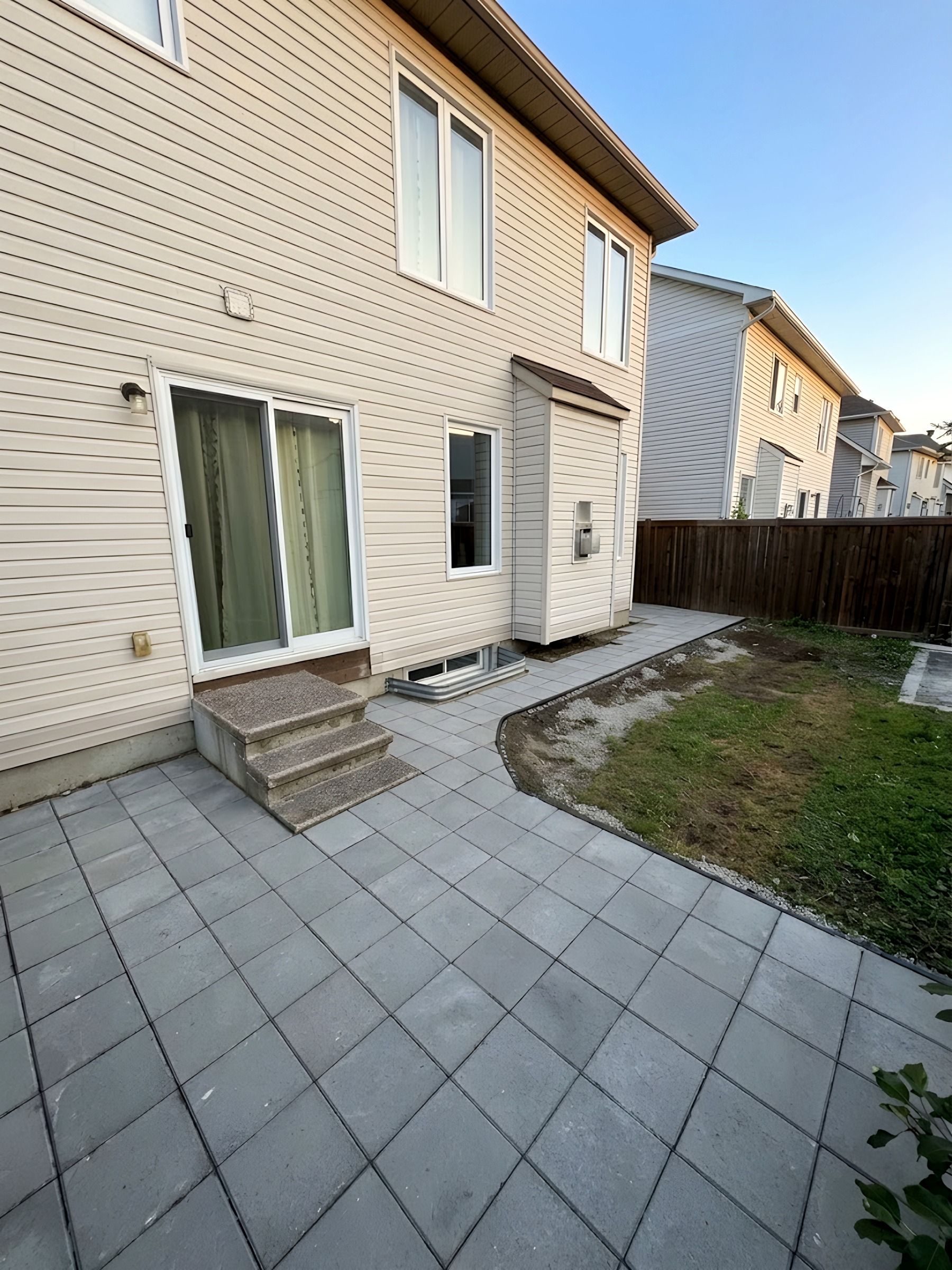
“Vlad and his coworkers are very hard working and professional with a realistic and fair pricing that cant beat any other company out there ! We just had a major leak in our basement and they efficiently waterproofed the foundation and created a french drain with outstanding finish of layering gravel and pavement reconstruction. They are the people to call for almost any kind of work on your house !! Thank you guys God Bless & Respekt!”

Gio Ivana Herrera · French drain after a basement leak
FAQ
Drainage & Grading in central Ottawa: common questions
Our downspout runs into a pipe in the ground. Should it stay that way?
City of Ottawa guidance advises disconnecting downspouts from the sewer system or foundation drains, capping the end that comes out of the ground, and sending roof water to permeable areas about 3 metres from the foundation, never onto a neighbour’s lot or the sidewalk. On a tight central lot, the hard part is where that water goes next. At the site visit we look at each downspout and plan the surface route for its water.
Does the City help with drainage on older lots?
In some areas, yes. Rain Ready Ottawa offers rebates for rainwater projects such as downspout redirection and rain gardens in priority stormwater retrofit areas, which are older parts of the city. You check your address on the City’s Rain Ready Ottawa page, and the program has its own conditions. We plan the drainage fix for your yard either way.
Water runs along the side of our house after rain. What fixes that?
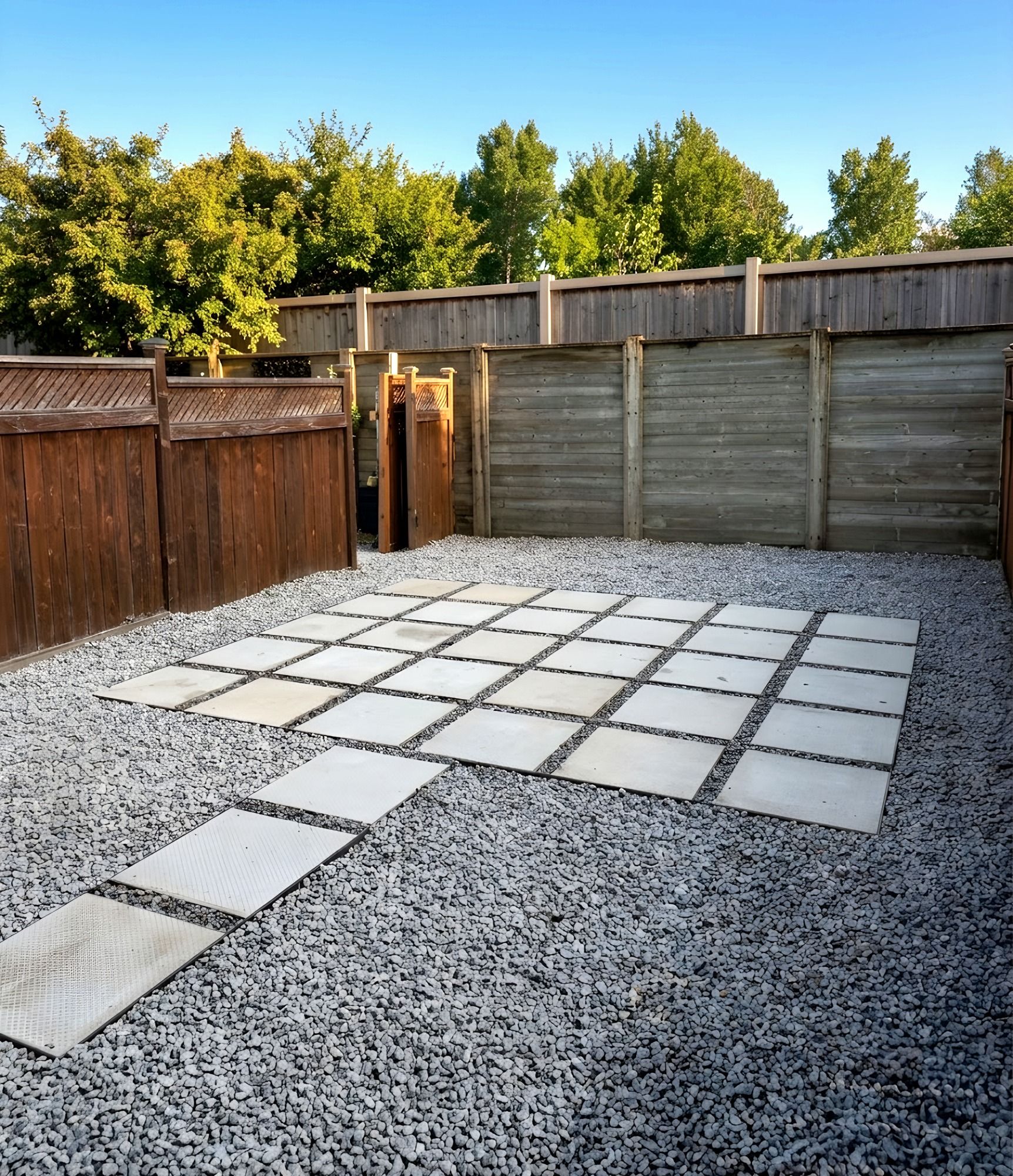
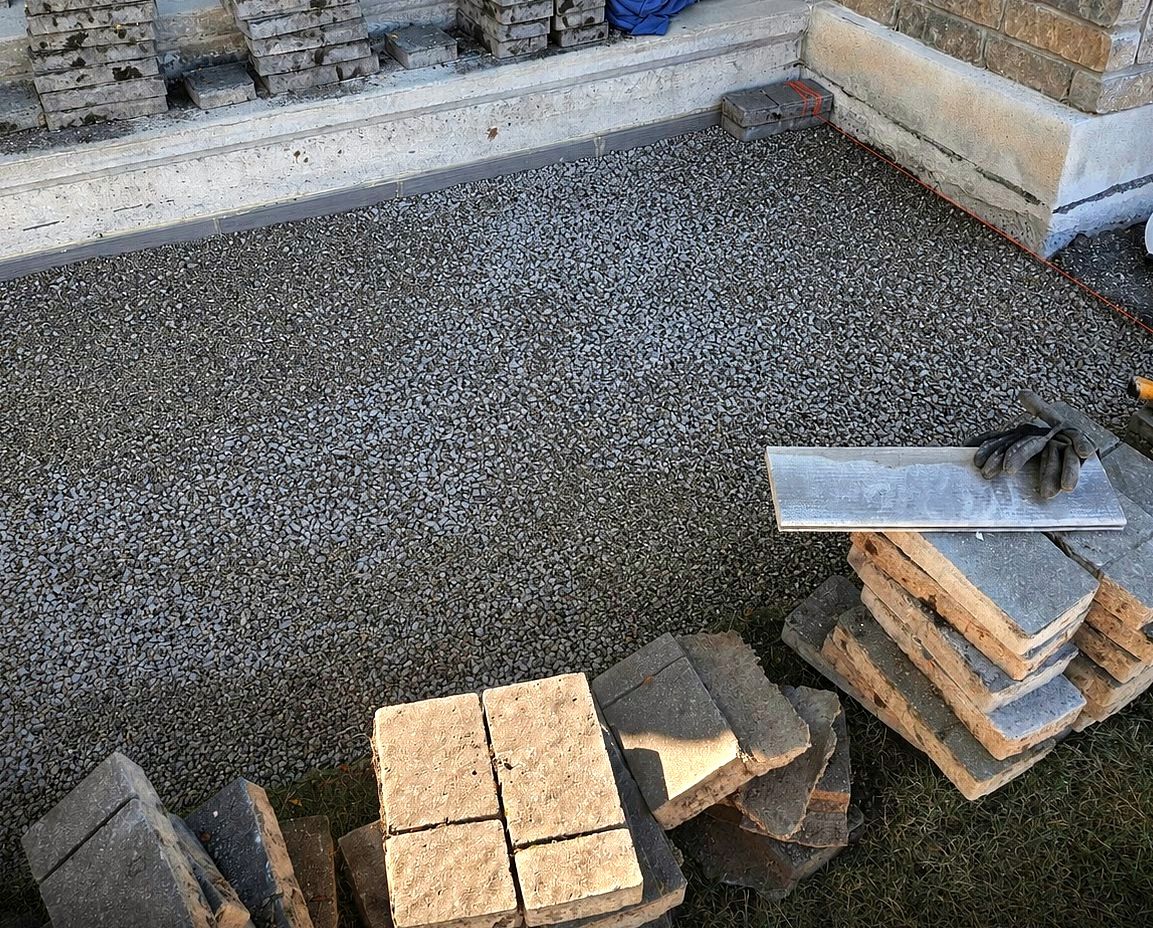
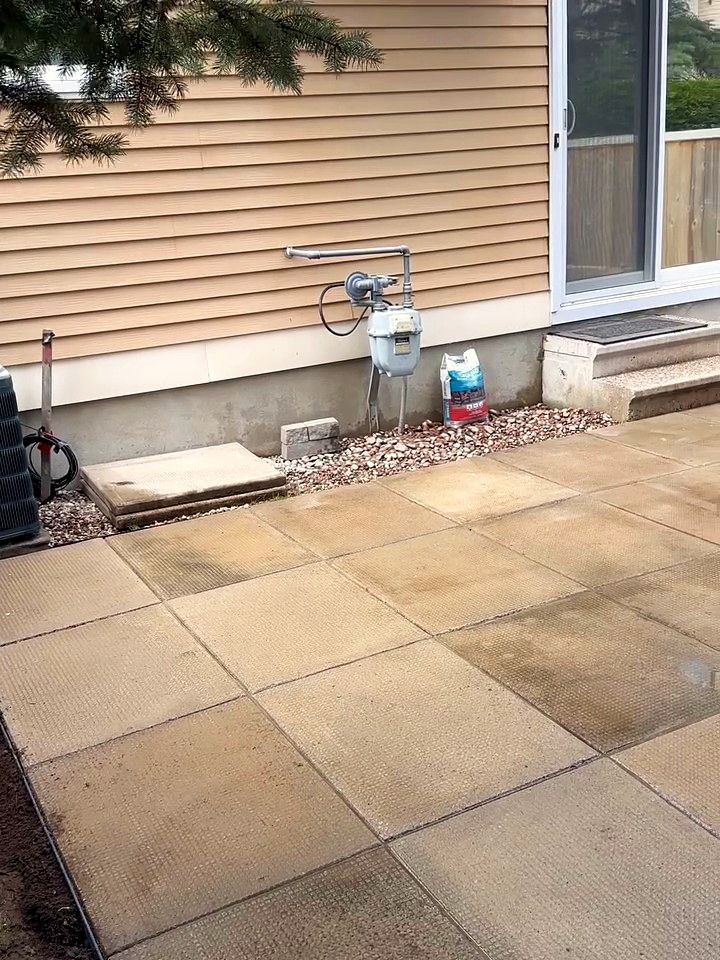
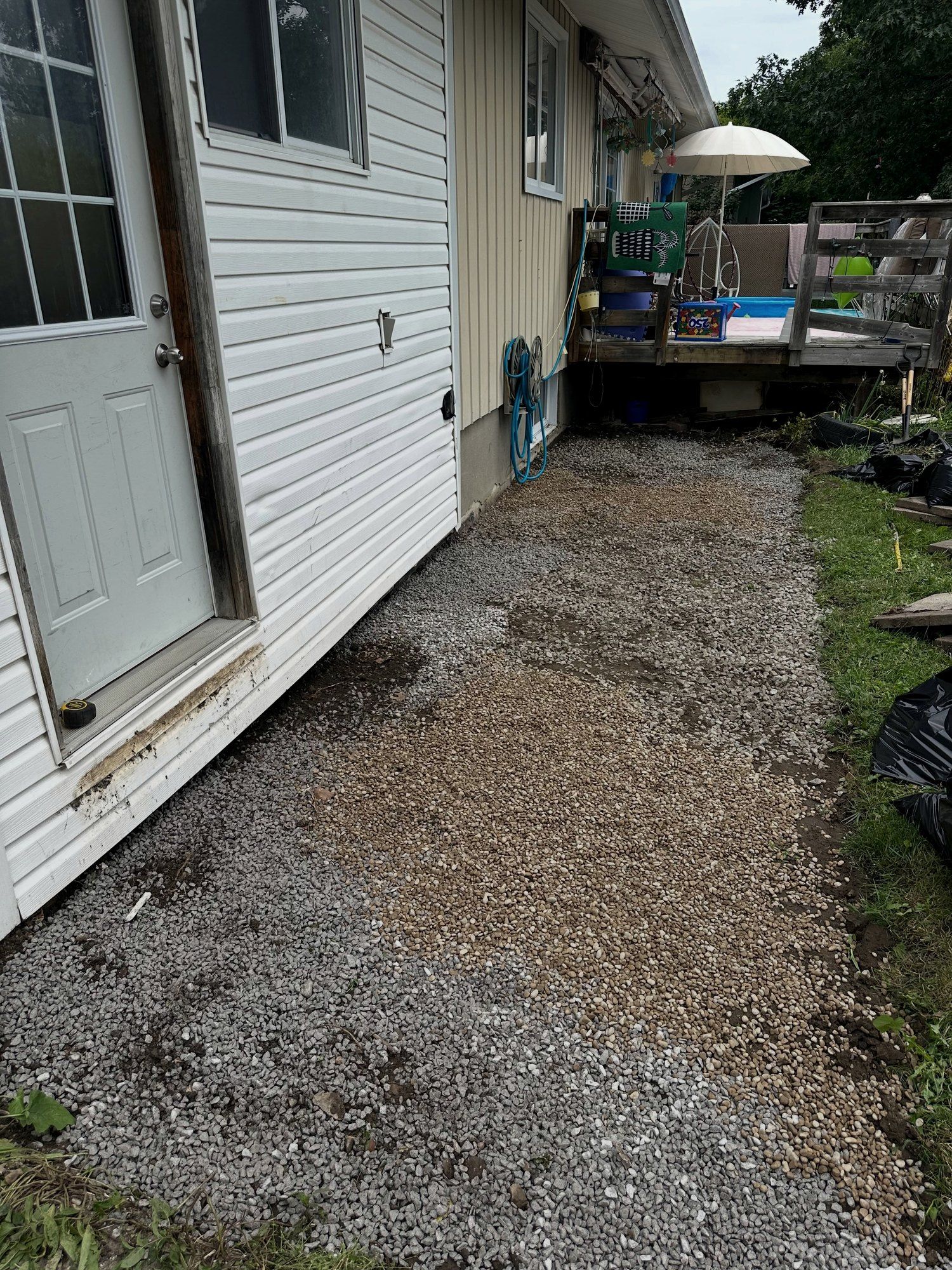
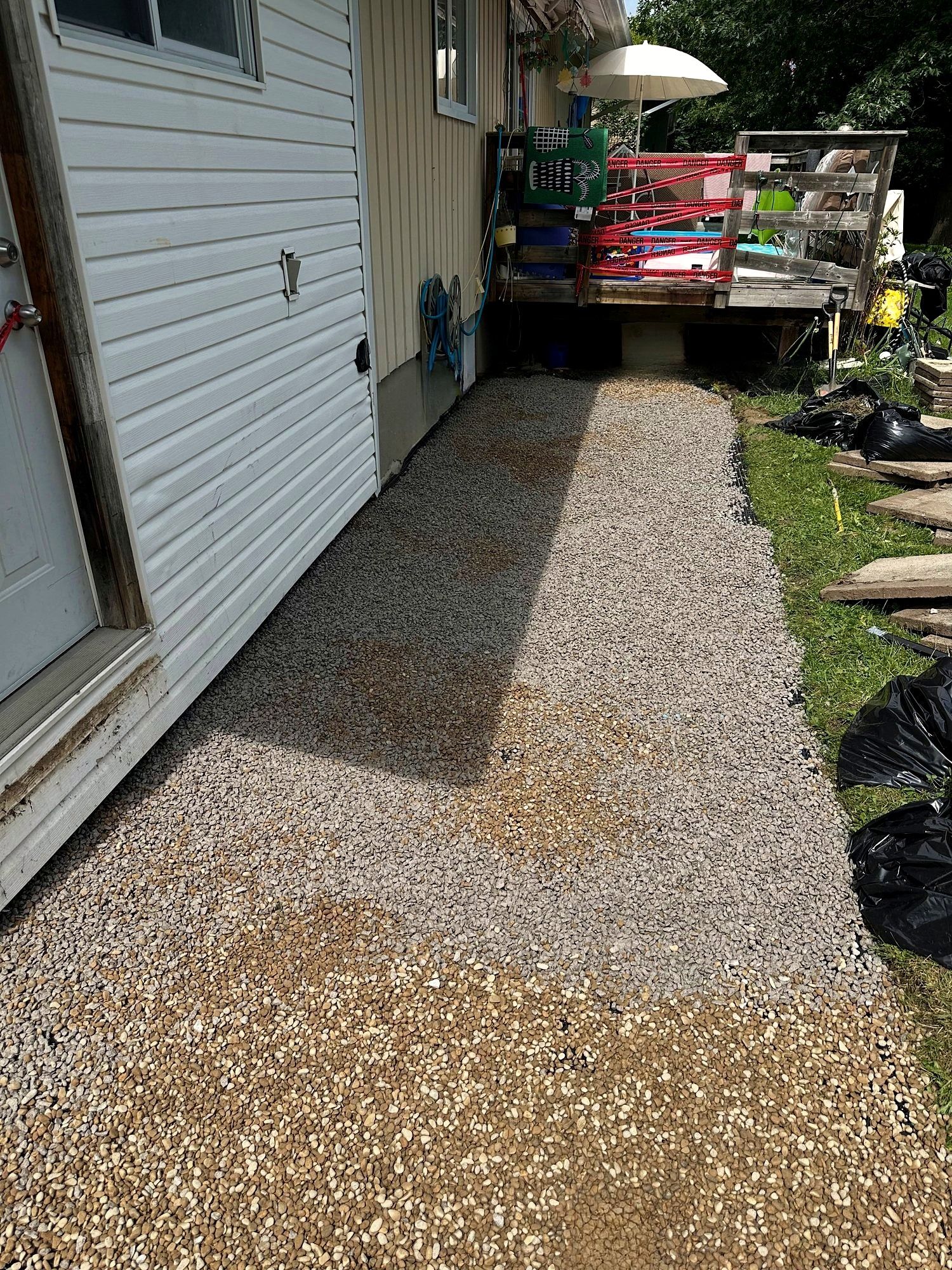
Two common causes are a side yard that has lost its fall away from the wall and old slabs that tip toward the foundation. Depending on the lot, the fix is regrading, a clear-stone strip over a dimpled membrane, a shallow French drain to an outlet, or a mix. One of our projects is this job: old slabs lifted off a side yard and replaced with clear stone along the foundation.
Can you regrade my yard if water sits near the house?
Yes, within the City of Ottawa rules. Owners are expected to keep the grades from the original grading plan and keep swales open. We check what applies to your property, then plan slope and drainage inside those limits so water moves away from the foundation.
Where should my downspouts drain?
City of Ottawa guidance says downspouts should discharge onto grass at least four feet from the foundation, and never onto a neighbour’s yard or the sidewalk. Where a lot is too tight for that, the downspout is planned together with the drainage. Ask us at the site visit about carrying roof water further from the house.

Book a free drainage estimate in central Ottawa
Tell us what you want built and send a few photos. We come out, look at what sits under the job, and give you the scope and the price in writing.